
2026-08-19 · Diego Florentino
What to Check on Your Roof After Hail in Central Texas
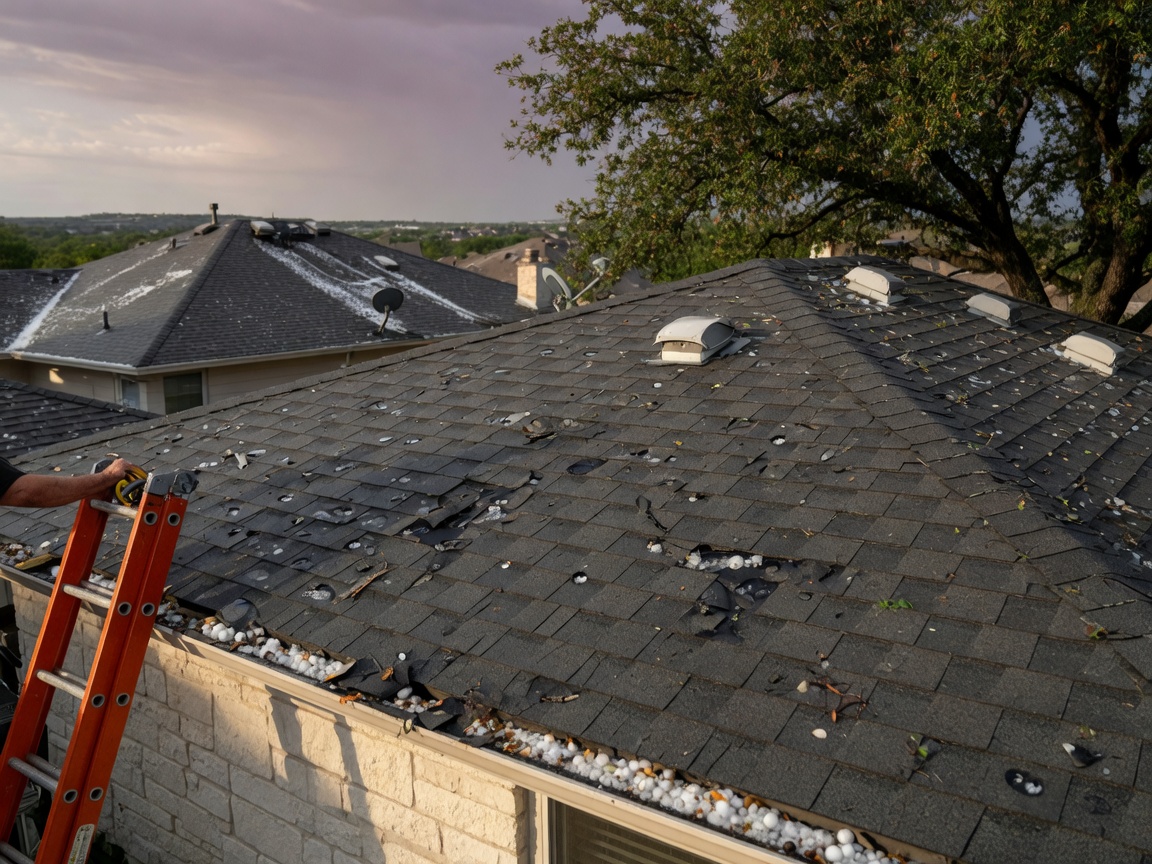
After hail in Central Texas, start by examining your shingles for granule loss and surface dents, as these appear within days on asphalt roofs common in Travis County homes built before 2000. Larger hailstones from spring storms often strip protective granules on south-facing slopes in areas like Hyde Park and Barton Hills, exposing the mat underneath to the region's hot humid summers that accelerate cracking. Walk the perimeter first, then use binoculars for higher sections near the Texas State Capitol or University of Texas Tower views, noting any dark patches where granules have washed into gutters.
Inspect Shingle Surfaces for Granule Loss and Dents
Central Texas hail frequently leaves round depressions in asphalt shingles on older stock in Clarksville and Mueller, where homes from the 1950s through 1980s use 3-tab shingles that dent more readily than modern architectural styles. Check each slope methodically after a storm, looking for areas where the surface feels gritty underfoot from displaced granules that then clog downspouts during the mild winters when wildflowers bloom. In East Austin and South Congress, tree cover from live oaks can mask some damage, so focus on exposed sections near Lady Bird Lake where wind-driven hail hits hardest. Measure any dents wider than a quarter; these spots lose UV protection faster under 100-degree summer days, shortening roof life by several years. Document with photos from multiple angles before the next rain washes evidence away. Homeowners in Westlake often notice this pattern on west-facing roofs first because afternoon storms track from the Hill Country.
Examine Flashing, Vents, and Seals Around Penetrations
Hail impacts loosen step flashing along valleys and around chimneys on Travis Heights and Zilker homes, allowing water entry during the heavy downpours that follow spring storms. Inspect metal flashing for new dents or lifted edges, especially where it meets brick or stucco near Mount Bonnell overlooks. Check plumbing vents and ridge vents for cracked boots or displaced covers, as these small components fail first on 20- to 30-year-old roofs in Pflugerville and Cedar Park. Run a gloved hand along seams to feel for gaps; even minor separations expand under the freeze-thaw cycles rare but possible in mild winters. In Downtown and Clarksville bungalows, original flashing often sits under multiple layers, so hail damage here signals the need for targeted repairs rather than full replacement. Note any sealant that has chipped away around skylights or attic fans common in Barton Hills properties.
Check Gutters, Downspouts, and Drainage Paths
Hail mixed with debris from Zilker Park or Barton Springs Pool areas often fills gutters on Hyde Park and East Austin homes, creating overflow that erodes fascia boards during subsequent rains. Look for dents in metal gutters that restrict flow and new stains on siding below downspout elbows. In neighborhoods like Mueller and Westlake, sloped lots direct water toward foundations, so verify that extensions still route runoff at least 5 feet from the house. Clear any granule buildup at the bottom of downspouts, as this material hardens quickly in humid summers and causes backups. Round Rock and Pflugerville properties with mature trees see extra leaf and hail debris that compounds the issue, requiring seasonal checks beyond the initial post-storm walk-through.
Assess Impact on Nearby Structures and When to Seek Help
Hail damage often extends to skylights, attic fans, and even solar panels on newer Travis County homes in Cedar Park, so inspect these after checking the main roof surface. Compare your findings against the linked guidance on When to Repair Versus Replace After Storm Damage in Austin to decide next steps. For properties in Round Rock or near the University of Texas Tower, where wind patterns intensify hail, consider a professional evaluation through Storm & Hail Damage Repair if granule loss exceeds 20 percent on any slope. Schedule during the 24-hour availability at Florentino Brothers Roofing LLC, located at 7150 Ed Bluestein Blvd, Austin, TX 78723, to catch issues before summer heat expands minor cracks. This approach keeps repairs focused and prevents leaks during the wetter spring months.