
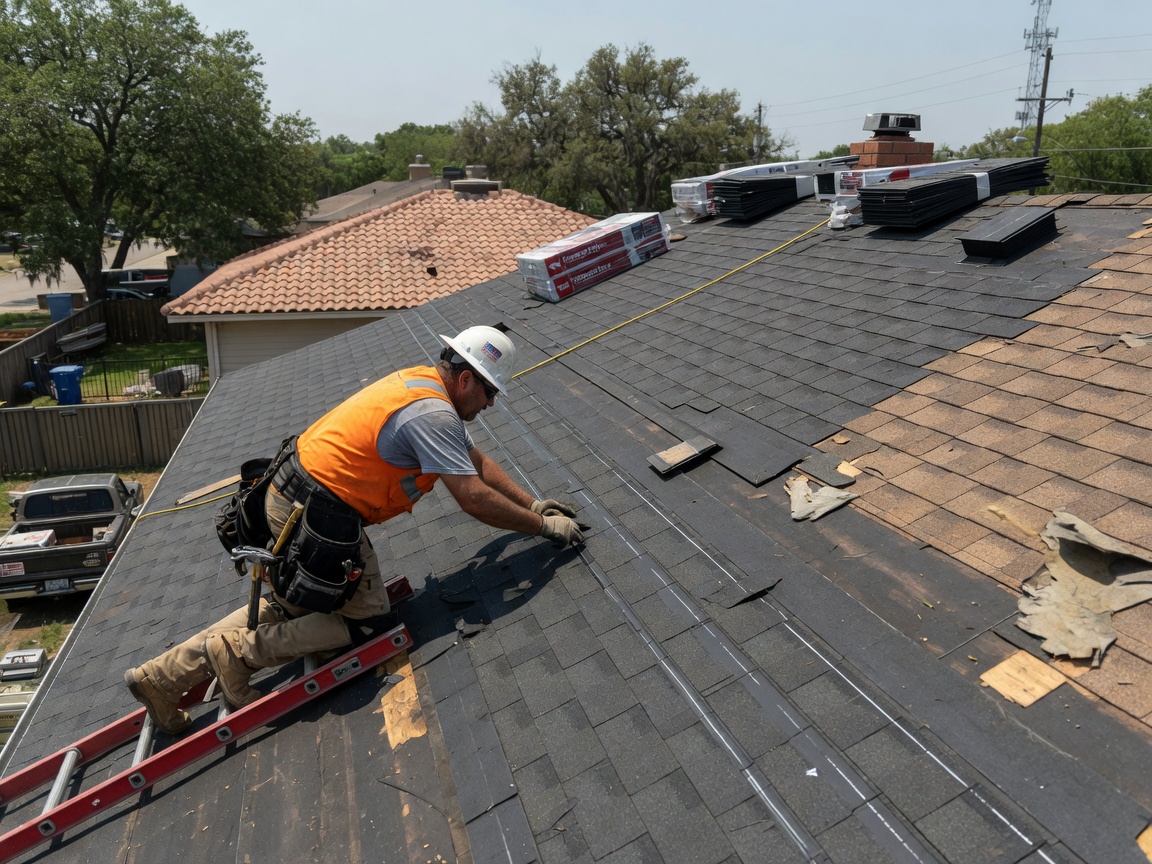
Austin's older neighborhoods like Hyde Park, Travis Heights, and Clarksville feature homes from the early 1900s with steep pitches and original decking that often needs full replacement during roof installation. Hot humid summers accelerate shingle degradation while spring wildflowers signal peak pollen season that can clog gutters on new roofs. We match materials to the home's age and exposure, especially on south-facing slopes near Lady Bird Lake where UV and wind exposure are higher.
Newer builds in Mueller and Barton Hills sit on varied terrain with clay-heavy soils that shift after heavy rains, requiring reinforced flashing at valleys and eaves. Metal or synthetic slate performs better than standard asphalt in these spots because it handles thermal expansion from 100-degree days. Code requirements in Travis County call for specific underlayment and ventilation details that differ from suburban jobs in Cedar Park or Pflugerville.
Edge cases appear on properties near Zilker Park or Mount Bonnell where tree cover creates moisture pockets and leaf debris. We install ridge vents sized for the attic volume and use ice-and-water shield along all eaves even though winters stay mild. Homeowners in East Austin and South Congress often request color matches that preserve historic district appearance while meeting current wind-load standards.
Installation crews from our base at 7150 Ed Bluestein Blvd work around existing solar arrays and skylights common on Westlake homes. Proper step flashing integration prevents leaks at chimney and wall intersections that show up after the first heavy spring rain. We remove all debris daily and leave the site broom-clean regardless of neighborhood.
Technician insight
In Austin the thing that catches most people out with roof installation is the clay soil movement around Barton Hills and Zilker that shifts foundations slightly each year; if you don't add extra flexible flashing at the eaves the new roof starts leaking at the drip edge after the first big spring rain.
East Austin Bungalow Roof Replacement
Older home in East Austin showed widespread shingle failure after several humid summers. We found rotted decking along the south slope and inadequate attic ventilation. Installed new architectural shingles with continuous ridge vent and upgraded flashing at all penetrations. Home stayed cooler and no leaks appeared after the next heavy rain.
Roof Installation Services We Offer
✓Asphalt Shingle Roof Installation
Durable three-tab or architectural shingles installed with proper ventilation and drip edge suited to Austin's humid summers.
✓Metal Roof Installation
Standing seam or corrugated metal systems that reflect heat and resist wind uplift on exposed Travis County properties.
✓Tile Roof Installation
Concrete or clay tile systems installed with correct underlayment for homes in hillside neighborhoods like Westlake.
✓Flat Roof Installation
Modified bitumen or TPO membranes applied to low-slope sections common on East Austin additions and commercial structures.
✓Synthetic Slate Roof Installation
Lightweight synthetic slate that matches historic Clarksville and Hyde Park homes without adding excessive weight to older decking.
✓Ridge Vent and Ventilation Installation
Continuous ridge vent systems sized for attic volume to reduce heat buildup during Austin's long summer months.
Roof Installation Cost in Austin, TX
| Service | Typical Range | What Affects It |
|---|---|---|
| Asphalt shingle roof | $8,000–$16,000 | Varies with square footage, pitch, and access in older neighborhoods. |
| Metal roof | $12,000–$22,000 | Higher for standing seam and complex rooflines near Lady Bird Lake. |
| Tile roof | $15,000–$28,000 | Depends on weight requirements and underlayment on hillside homes. |
| Ridge vent addition | $800–$2,200 | Based on linear feet and attic configuration. |
Ranges are typical for Austin, TX and confirmed with an exact written quote before any work starts.
How it works
- 1
Site Assessment
We inspect decking, existing flashing, and attic ventilation on site in the specific neighborhood.
- 2
Material Selection
Recommend shingles or metal based on roof pitch, sun exposure, and Travis County wind requirements.
- 3
Deck Preparation
Replace damaged sheathing and install new underlayment and drip edge before new material goes down.
- 4
Installation
Lay new roofing with proper nailing patterns and flashing details at all penetrations.
- 5
Final Walkthrough
Review completed work, check ventilation, and remove all debris from the property.
Pricing
Upfront written quotes provided after on-site inspection.