
2026-08-19 · Diego Florentino
When to Repair Versus Replace After Storm Damage in Austin
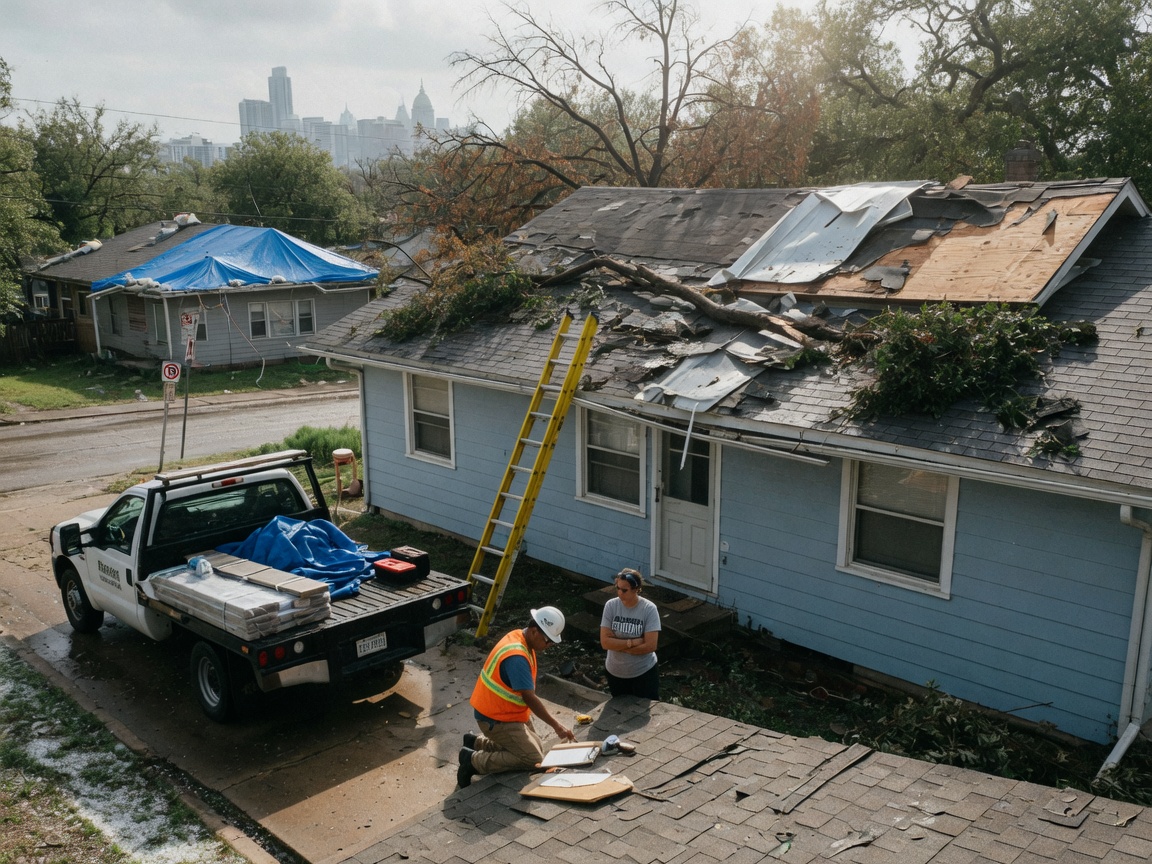
In Austin, repair storm damage when it covers less than 25% of the roof and the decking stays intact, but replace when damage reaches 30% or more or when multiple layers of shingles fail after exposure to hot humid summers and spring hail in Travis County.
Assessing Damage from Local Storms
Austin roofs face wind-driven rain, hail, and occasional flash flooding that hits neighborhoods such as Zilker, Barton Hills, and Travis Heights hardest because of their proximity to Lady Bird Lake and Barton Creek. Crews at Florentino Brothers Roofing LLC inspect for granule loss on asphalt shingles, dented metal panels, and water intrusion around flashing near the University of Texas Tower area where older homes from the 1950s often carry two or three layers already. In East Austin and Clarksville, where bungalows sit under mature oaks, fallen limbs create punctures that spread quickly once summer humidity sets in. Checking the underside of the deck from the attic reveals soft spots before visible leaks appear on ceilings.
Signs Repair Will Hold
Localized hail dents on less than one-quarter of the surface, torn shingles along eaves from high winds, or minor flashing issues around chimneys usually allow targeted fixes. Homeowners in Mueller and Westlake often see success with section repairs when the rest of the roof still shows good granule coverage and the underlayment remains dry. These jobs commonly run between $400 and $1,500 depending on access and material match. After repair, the roof can last another 8–12 years if inspected yearly before spring wildflower season brings more storms. Linking to detailed checklists helps owners spot issues early in areas like Pflugerville and Round Rock that share the same weather patterns.
When Replacement Is Required
Replacement becomes necessary once damage affects 30% or more of the roof, when water has reached the decking in multiple spots, or when two prior repairs have already been made on the same slope. Homes in Hyde Park and South Congress with 1940s–1960s construction frequently reach this point after a single severe hail event because the original shingles have already endured decades of humidity cycles. Full replacement also makes sense when the roof has three or more layers that add excessive weight during high-wind events common near Mount Bonnell. In Cedar Park and nearby communities, crews often recommend complete tear-offs to install new underlayment that handles the 2–3 inches of rain that can fall in an hour.
Weather and Terrain Factors in Travis County
Hot humid summers accelerate shingle aging while mild winters allow moss and algae to grow in shaded valleys, weakening seals around vents. Spring wildflowers signal the start of hail season that pits asphalt and dents metal roofs across Downtown and the Mueller development. Properties near Zilker Park and Lady Bird Lake contend with higher humidity that promotes rot once water sits under lifted shingles. Flash flooding in low-lying streets of East Austin can overwhelm gutters and force water under eaves, a problem covered further in related drainage discussions. These conditions mean any post-storm evaluation must include attic checks for moisture that may not show on the surface for weeks.
Next Steps After Evaluation
Document every dent, tear, and soft spot with photos from multiple angles before deciding. Contact a 24-hour team at 7150 Ed Bluestein Blvd for an inspection that distinguishes between cosmetic hail hits and structural compromise. When repair is viable, match existing materials to avoid patchwork appearance on visible slopes in historic districts. If replacement is advised, consider upgraded underlayment and impact-resistant shingles rated for the wind speeds recorded in Travis County storms. Follow-up maintenance visits every spring keep the roof performing through the next humid season and reduce the chance of repeat claims.