
2026-08-19 · Diego Florentino
Managing Oak Tree Debris on Roofs in South Austin
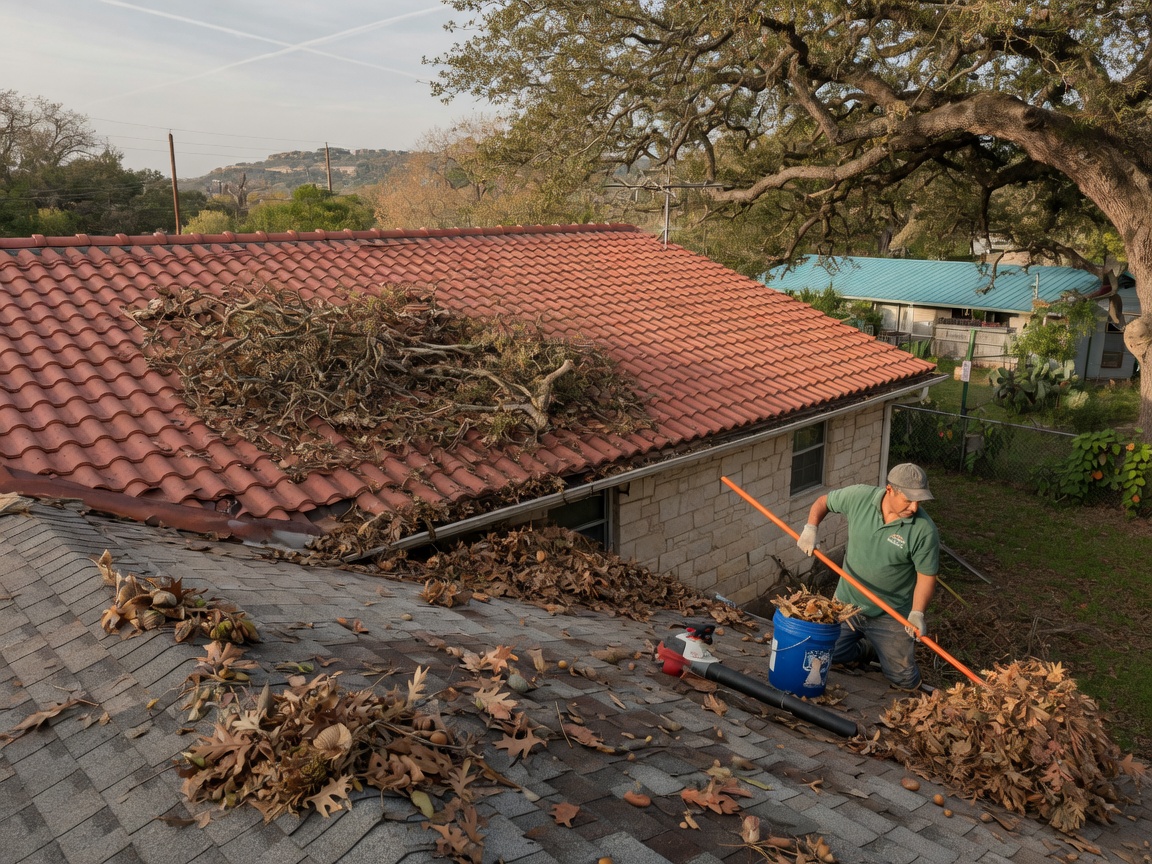
Live oak debris in South Austin requires clearing every 4–6 weeks from late winter through early summer and again after fall acorn drop to keep gutters flowing and prevent moisture pockets under shingles. Homes in Travis Heights and Barton Hills sit among mature live oaks that shed continuously because of the area's hot humid summers and mild winters, so skipping cycles quickly leads to algae streaks and blocked downspouts.
Why South Austin Live Oaks Create Extra Roof Load
Live oaks along Barton Hills and Zilker drop acorns that weigh 0.2–0.4 ounces each in clusters of dozens per branch, plus waxy leaves that mat when wet. These materials collect in valleys and around chimneys on the 20- to 40-year-old asphalt roofs typical in the neighborhood. The same debris also settles into the low-slope sections common on 1950s–1970s homes near Lady Bird Lake, holding humidity against the underlayment during the long humid summers and encouraging granule loss.
Mild winters keep trees green longer, so the spring wildflower season often arrives with roofs already carrying an extra 15–20 pounds of organic matter per square. That added weight plus Austin's occasional heavy spring rains pushes water under flashing at skylights and vents faster than in drier parts of Travis County.
Spotting Debris-Related Problems Before Leaks Start
Walk the perimeter and look for dark streaks running down from ridge lines or gutters sagging under leaf weight. In Barton Hills and Travis Heights, check second-story windows for acorn dents in shingles and moss starting at the north-facing eaves where shade from neighboring oaks keeps surfaces damp. These signs appear first on homes built before 1980 because their original felt underlayment absorbs more moisture than modern synthetics.
If you notice standing water in gutters after a typical 1-inch rain or granules collecting at downspout outlets, the debris layer is already directing water backward under the shingles. Early removal prevents the need for larger repairs later.
Safe Clearing Methods That Protect Shingles
Use a soft-bristle roof rake or leaf blower on low from a ladder placed on firm ground rather than walking directly on the surface, especially on the steeper pitches found in Clarksville and Zilker. Remove debris in small sections working downhill so loosened material does not slide into lower valleys. Wear eye protection because live oak acorns can roll underfoot.
Never use pressure washers on asphalt shingles; the force strips granules and forces water under tabs. For gutters, a scoop and garden hose flush works better than scraping that can bend aluminum. Schedule the work on dry days when temperatures stay below 90 °F to avoid softening the shingles.
How Often to Schedule Professional Checks
Homeowners benefit from a roof inspection twice a year, once after spring pollen and again after the heaviest fall leaf drop, because ground-level views miss buildup around plumbing boots and skylights. A roof maintenance service visit includes debris removal plus checks for lifted tabs and sealant cracks that debris hides. These visits typically take 2–3 hours on a 1,800-square-foot South Austin home and cost less than emergency leak repairs after a clogged gutter overflows during a thunderstorm.