
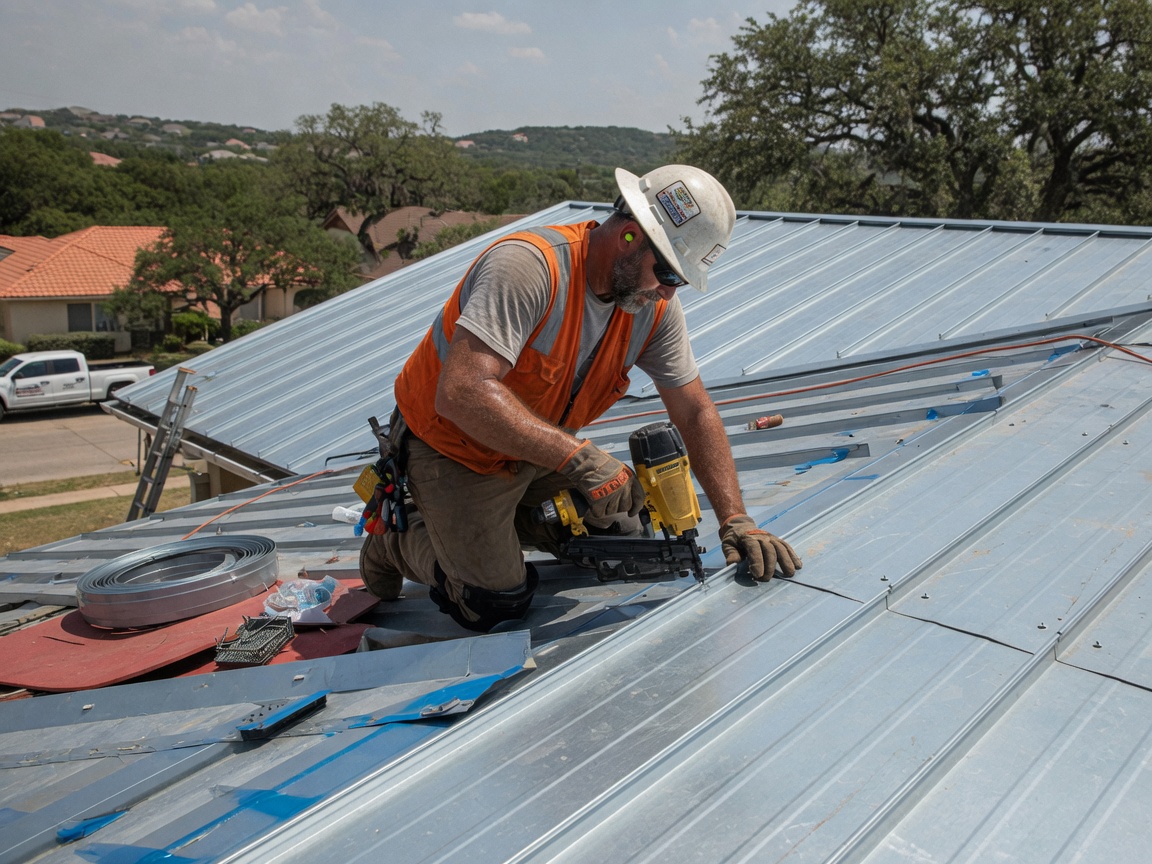
Austin's hot humid summers create condensation risks under metal roofs that require precise ventilation and underlayment choices, especially on homes in older neighborhoods like Hyde Park and Clarksville where original structures often lack modern airflow. Standing seam systems perform well against UV exposure and the occasional high winds that accompany spring storms, but installers must account for thermal expansion on long runs common in East Austin bungalows. Proper fastening patterns prevent oil canning while maintaining the lightweight advantage that benefits aging roofs in Travis Heights and Barton Hills.
Metal roofing handles the mild winters without the freeze-thaw cycles that damage other materials, yet spring wildflower season often brings pollen and debris that can clog valleys and gutters on properties near Lady Bird Lake or Zilker Park. In Travis County, wind-driven rain during thunderstorms demands sealed seams and drip edges that extend farther under panels than standard coastal details. Homeowners in Westlake and Mueller frequently choose galvanized or aluminum options for corrosion resistance near the lake and creek corridors.
Installation on two-story homes in South Congress or Downtown requires additional fall protection and staging that increases labor time compared with single-story homes in Pflugerville or Cedar Park. Metal panels reflect heat effectively during peak summer afternoons, but without adequate ridge venting many older Austin homes experience trapped moisture that leads to deck rot over time. Local crews routinely inspect for prior asphalt layers that must be removed before new metal can be fastened correctly.
Technician insight
In Austin the humidity during long summers catches most people out because metal roofs expand and contract daily; without the right underlayment and venting you get condensation on the deck in older East Austin homes that were never built for metal.
East Austin Bungalow Metal Upgrade
Homeowner reported recurring leaks around a skylight after spring storms. Inspection showed failed butyl tape on an older screw-down metal roof with no ridge vent. Crew removed the damaged section, added synthetic underlayment and new standing seam panels with sealed flashing, restoring dry attic space without full replacement.
Metal Roofing Services We Offer
✓Standing Seam Metal Roof Installation
Hidden fastener systems installed on Austin homes to withstand spring storms while providing clean lines suitable for historic districts like Clarksville.
✓Metal Roof Panel Replacement
Targeted replacement of damaged or corroded panels on properties in East Austin and Mueller where hail or wind has compromised sections without full roof replacement.
✓Metal Roofing Over Existing Shingles
Lightweight overlay options that reduce tear-off costs for homes in Hyde Park and Travis Heights where structural loads must stay minimal.
✓Metal Roof Leak Repair
Seam sealing and flashing fixes for leaks around chimneys and skylights common on metal roofs near Barton Springs Pool and Zilker Park during heavy rains.
✓Galvalume Metal Roofing
Corrosion-resistant material choice for homes in Westlake and near Lady Bird Lake where humidity and occasional lake-effect moisture accelerate wear.
Metal Roofing Cost in Austin, TX
| Service | Typical Range | What Affects It |
|---|---|---|
| Standing Seam Installation | $8–$14 per sq ft | Varies with gauge, color, and steep pitch on two-story homes in Travis Heights or Westlake. |
| Panel Replacement | $600–$1800 | Depends on number of panels and whether underlayment refresh is required in East Austin. |
| Leak Repair Visit | $350–$750 | Includes seam resealing and flashing work; higher for multi-story access near Lady Bird Lake. |
| Full Tear-Off Before Metal | $2–$4 per sq ft | Required when multiple layers exist on older Hyde Park or Clarksville homes. |
Ranges are typical for Austin, TX and confirmed with an exact written quote before any work starts.
How it works
- 1
Site Assessment
Inspect roof pitch, existing deck condition, and ventilation in neighborhoods such as East Austin or Hyde Park while noting proximity to trees or lake humidity.
- 2
Material Selection
Recommend gauge and coating based on wind exposure in Travis County and thermal movement needs for long runs common on Austin homes.
- 3
Preparation and Underlayment
Remove loose debris, install high-temperature underlayment, and add ridge venting suited to humid summers before panel placement.
- 4
Panel Installation and Sealing
Fasten panels with proper spacing for expansion, seal all penetrations, and verify drip edge extension for spring storm performance.
- 5
Final Walkthrough
Check seam alignment, gutter integration, and ventilation function before leaving the site in areas like Zilker or Barton Hills.
Pricing
Upfront quotes based on roof size, access, and material gauge; no hidden fees.