
2026-08-19 · Diego Florentino
Ground-Level Roof Inspection Steps for Austin Homeowners
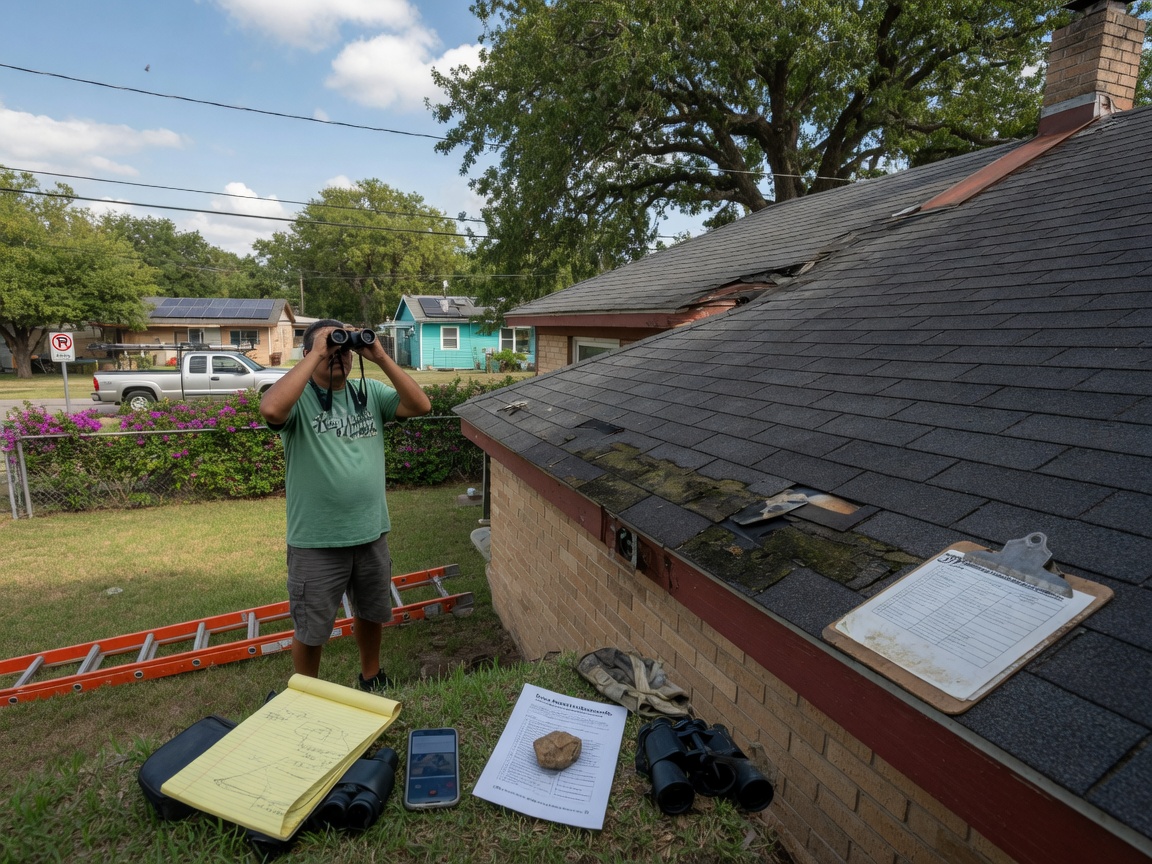
Austin homeowners start a ground-level roof inspection by walking the perimeter during daylight and noting any shingle edges lifting or granules collecting in gutters, which appear after 8–12 years on homes built before 2000 in Travis County. Hot humid summers accelerate asphalt breakdown while spring rains test drainage on sloped lots near Lady Bird Lake and Barton Hills. This view from the ground or a stable ladder reveals 70 percent of visible problems without climbing the full pitch.
Spotting Shingle and Surface Wear from the Ground
Walk around the property at different angles to check for missing tabs, curling edges, or bald patches where granules have washed away. In East Austin and Clarksville, many 1940s–1970s homes still carry original three-tab shingles that crack faster under repeated 95-degree days. Look for dark streaks from algae that thrive in humidity and note any uneven color on south-facing slopes. Compare the roof against neighboring homes in Mueller or Barton Hills to spot accelerated wear from reflected heat off pavement. If granule loss shows in downspouts, schedule a closer look before the next storm season hits.
Checking Drainage and Gutter Performance
Examine gutters and downspouts for sagging, separated joints, or overflow stains on fascia boards, common after heavy spring rains in low-lying Travis County spots. How Flash Flooding Affects Roof Drainage in Austin explains why Zilker and South Congress properties need clear 2-inch by 3-inch downspouts. From the ground, watch water flow during a test with a hose to confirm it exits away from the foundation rather than pooling near the drip edge. Clogged lines near the Texas State Capitol area often trace back to live oak debris that builds up faster than in drier nearby cities like Cedar Park.
Inspecting Flashing, Vents, and Penetrations
Scan chimney bases, vent pipes, and skylight curbs for lifted or rusted flashing that allows water entry during mild winter rains. Older homes in Hyde Park and Westlake frequently show sealant failure around plumbing stacks after 10–15 years. Check that step flashing remains tucked under shingles on the uphill side and that counter flashing sits tight against brick or stucco. In Downtown and Travis Heights, metal roof transitions around additions often need attention first because expansion from summer heat loosens fasteners.
Knowing When Professional Assessment Is Needed
Document findings with photos and notes on locations, then compare against the Seasonal Maintenance Calendar for Austin Roofs to time any follow-up. Persistent granule piles, daylight visible through attic sheathing, or water stains on ceilings signal the need for Roof Repair before leaks reach interior drywall. Homeowners in Round Rock or Pflugerville with similar stock can use the same ground checks but should account for slightly different wind exposure. Florentino Brothers Roofing LLC at 7150 Ed Bluestein Blvd, Austin, TX 78723 remains available 24 hours for owners who want a second set of eyes on findings.
Tracking Changes Over Time
Keep a simple log with dates and photos taken from the same ground spots each spring and fall. This record shows whether curling on west slopes worsens after a humid summer or if gutter stains appear only after specific storms. Properties near Mount Bonnell or University of Texas Tower often sit on varied terrain that creates micro-climates affecting roof longevity. Consistent notes help distinguish normal aging from storm damage that may qualify for insurance review in East Austin or Mueller subdivisions.