
2026-08-19 · Diego Florentino
How Flash Flooding Affects Roof Drainage in Austin
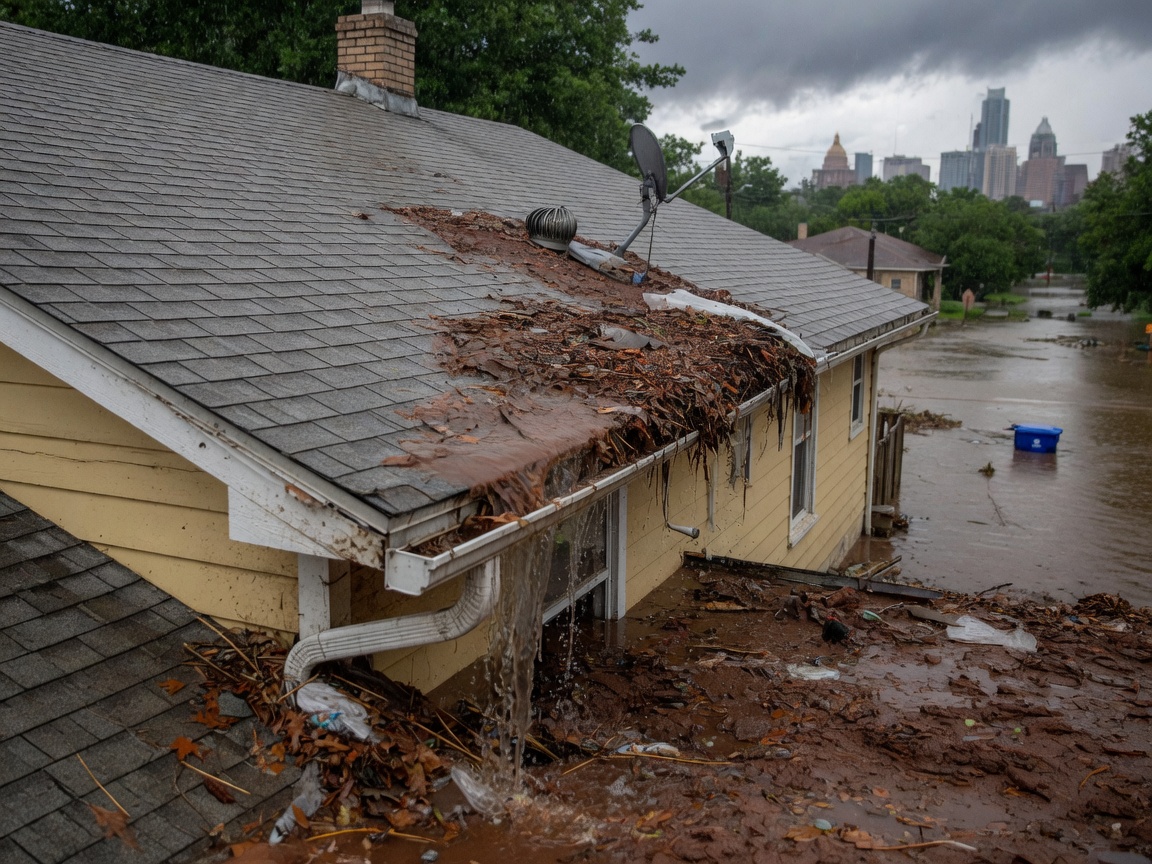
Flash flooding in Austin can overwhelm roof drainage systems within minutes during intense downpours of 2-4 inches per hour, leading to water pooling on low-slope sections and forcing water under shingles or flashing when gutters and downspouts lack capacity or proper pitch.
Austin's Climate and Flash Flood Patterns
Hot humid summers bring sudden thunderstorms that drop heavy rain on already saturated ground, while mild winters allow vegetation growth that later clogs drainage paths. Spring wildflowers signal the season when soil saturation peaks and runoff from hillsides like those near Mount Bonnell funnels water toward neighborhoods such as Zilker and Barton Hills. These patterns mean roof drainage must handle not only direct rainfall but also wind-driven water that hits from multiple angles during a single event.
Terrain in East Austin and Clarksville amplifies the issue because older homes sit on lots with minimal grading away from foundations. Water backs up against parapets or low eaves faster than on newer subdivisions in Mueller. Homeowners in these areas often see overflow at scuppers or valley intersections first because original drainage was sized for lighter rain loads typical decades ago.
How Drainage Systems Fail During Flood Events
Standard 5-inch gutters on many Travis County homes cannot keep pace when rainfall exceeds 3 inches in under an hour, causing water to crest the front lip and run behind fascia boards. Downspouts spaced more than 20 feet apart create bottlenecks, especially on long roof runs common in South Congress bungalows. Debris from nearby live oaks and cedar elms compounds the problem by reducing effective opening size within the first 15 minutes of heavy rain.
In Westlake and Hyde Park, where many roofs date to the 1960s-1980s, original leaders often terminate too close to foundations or discharge onto flat sections that then sheet water back toward walls. This creates repeated saturation cycles that shorten shingle life and promote algae growth visible from ground level after repeated storms.
Neighborhood Variations Across Austin
Downtown high-rises and nearby Travis Heights properties face additional pressure from wind-driven rain that pushes water uphill under metal flashing. Barton Hills homes on steeper lots experience faster sheet flow that can overwhelm scuppers if leaf guards are absent. In contrast, newer construction in areas near Pflugerville experiences fewer immediate failures because builders now install larger 6-inch gutters and additional downspouts as standard practice.
Roof leak repair becomes necessary more often in Clarksville and East Austin because older flashing details were never designed for the volume of water modern storms deliver. Regular inspection of valley intersections and step flashing after each major event helps catch issues before interior damage appears.
Practical Steps to Improve Drainage Performance
Measure existing gutter capacity against local rainfall rates and consider upsizing to 6-inch profiles on homes with roof footprints over 2,000 square feet. Ensure downspouts discharge at least 5 feet from foundations and install extensions or splash blocks on every outlet. Clean gutters and downspouts quarterly, paying special attention after spring pollen and fall leaf drop.