
2026-08-19 · Diego Florentino
Understanding Wind Damage on Roofs in Travis County
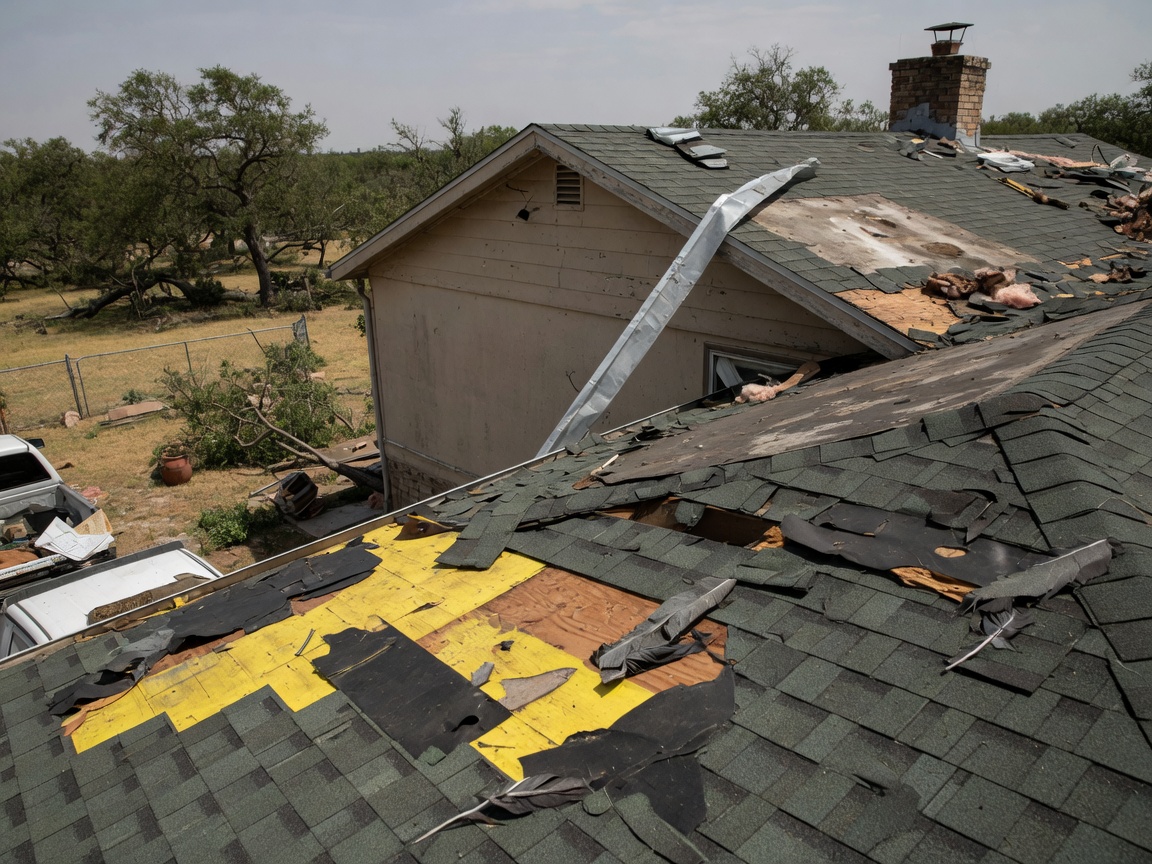
In Travis County, wind damage to roofs typically shows up as lifted or missing shingles, torn flashing, and dented vents after gusts reach 50 mph or higher during spring thunderstorms. These forces hit older homes in Hyde Park and Clarksville especially hard because their asphalt shingles have aged 15–25 years without modern wind-rated underlayment. Newer builds in Mueller and Barton Hills fare better with impact-resistant materials, yet even they lose ridge vents when straight-line winds align with the prevailing southeast flow off Lady Bird Lake.
How Spring Thunderstorms Drive Wind Damage in Travis County
Austin’s mild winters give way to March through May storms that carry the strongest sustained winds of the year. These systems often track across the county from the northwest, slamming into south-facing roof slopes in Travis Heights and Zilker Park. Once shingles lift, the hot humid summers that follow push moisture under the felt, accelerating rot along the decking in East Austin bungalows. Roofers working these neighborhoods routinely find that a single 60 mph gust can strip an entire course of shingles on a 20-year-old roof while leaving adjacent newer sections intact.
Terrain and Housing Stock That Change the Job on the Ground
Rolling hills around Mount Bonnell and the Barton Hills area create localized wind tunnels that funnel gusts upward into eaves and gables. Homes built on these slopes experience uplift forces 20–30 percent higher than flat lots in Pflugerville or Round Rock. In Clarksville and Westlake, mature live oaks provide partial shielding, yet their branches become projectiles during 70 mph microbursts, puncturing membrane roofs on flat sections. Crews therefore inspect both the roof surface and the tree canopy before any repair begins.
Signs That Indicate Wind Has Compromised Your Roof
- Missing or curled shingles along the windward edge, especially on south and west exposures.
- Flashing pulled away at chimneys and skylights, allowing water entry during the next rain.
- Dented ridge vents or loosened turbine vents that no longer seal properly.
- Granule loss concentrated in linear patterns rather than random patches, pointing to mechanical lift rather than age.
These indicators appear consistently on inspections in Downtown and South Congress properties where narrow lots place roofs close to neighboring trees.
Why Prompt Assessment Prevents Secondary Damage
Once wind lifts shingles, the subsequent hot humid summers drive rapid deck deterioration in Travis County. A small tear that goes unaddressed for two months can turn into widespread rot requiring deck replacement. Linking wind damage to drainage issues, many Austin roofs also suffer when lifted flashing directs water into gutters already stressed by flash flooding. Homeowners in Cedar Park and Round Rock often schedule roof inspection after any storm that produces sustained winds above 45 mph to catch problems early.
Practical Steps After a Wind Event
- Document visible damage with dated photos from the ground before climbing.
- Check attic insulation for wet spots near the ridge and eaves.
- Note any new interior stains on ceilings in rooms facing prevailing winds.
- Contact a local roofer for a full assessment rather than attempting temporary tarps that can worsen uplift.