
2026-08-19 · Diego Florentino
Cedar Shake Roof Care Tips for Austin Properties
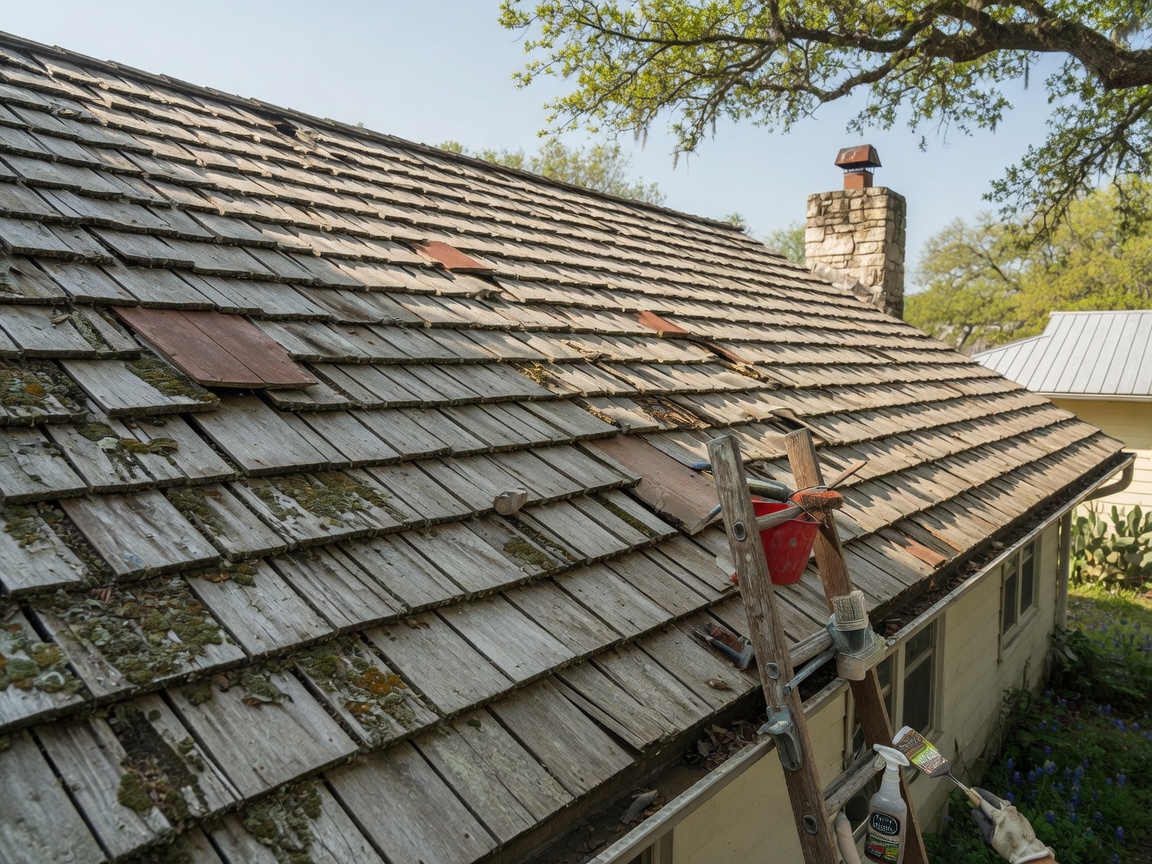
Cedar shake roofs in Austin typically need professional cleaning every 3–5 years and full inspections twice annually to maintain their 25–35 year lifespan under local conditions. Hot humid summers accelerate algae and moss growth while intense UV rays dry and crack the wood faster than in milder climates, and mild winters allow year-round access for repairs but bring occasional freeze-thaw cycles that can lift shakes.
Austin Climate Effects on Cedar Shakes
Hot humid summers in Travis County push moisture into the wood, promoting mold and algae that trap water against the shakes and shorten service life. Properties near Lady Bird Lake or in Zilker often see faster growth because of higher humidity and shade from mature trees. Mild winters reduce ice damage but allow pollen and spring wildflowers to accumulate, creating a layer that holds moisture against the surface during the first humid days of May. In neighborhoods such as Clarksville and Barton Hills, older homes with cedar shakes face added stress from afternoon sun exposure that bleaches and checks the wood. Regular removal of debris prevents these issues from compounding into leaks during the next heavy rain.
Inspection Schedule for Local Properties
Homeowners should walk the roof twice a year, once after the last spring pollen and again before summer heat peaks. Focus on checking for lifted shakes, dark staining, and granule loss around valleys and near the Texas State Capitol area where wind patterns differ. In East Austin and Mueller, tree cover increases shade-related moisture, so look for soft spots along the north slopes. A ground-level check with binoculars can reveal missing fasteners or ridge cap damage before it requires Roof Inspection. Documenting changes each season helps track how quickly the shakes age under Austin's UV load.
Cleaning Steps That Protect Cedar
Use a soft-bristle brush and low-pressure rinse to remove moss without gouging the wood. Apply a zinc or copper-based treatment labeled for cedar to slow regrowth during humid months. In South Congress and Hyde Park, where many 1920s–1940s homes retain original shakes, avoid harsh chemicals that darken the natural tone. Schedule cleaning in early fall after temperatures drop below 90 degrees so the treatment dries before winter. Clearing gutters at the same time prevents overflow that saturates fascia boards and drives water under the shakes.
Handling Common Local Issues
Moss colonies appear first on north-facing slopes in shaded Travis Heights yards. Lifted shakes often occur near chimneys after wind-driven rain common in spring. UV checking shows as fine cracks on west-facing exposures in Westlake and Barton Hills. Addressing these promptly with targeted replacement of individual shakes avoids full section repairs later. Homeowners in Round Rock and Pflugerville who face similar humidity can follow the same steps but may need an extra inspection after summer storms.
When Professional Maintenance Adds Value
When staining covers more than 20 percent of the surface or multiple shakes show curling, schedule work through a local contractor familiar with cedar. Roof Maintenance Services can apply preservative coatings that extend intervals between cleanings. Refer to the Seasonal Maintenance Calendar for Austin Roofs for timing that aligns with pollen and heat cycles. In Cedar Park and surrounding areas, owners of 1970s–1980s homes benefit from the same approach used downtown because the wood species and exposure patterns remain consistent across Travis County.