
2026-08-19 · Diego Florentino
Attic Ventilation Fixes for Hot Austin Summers
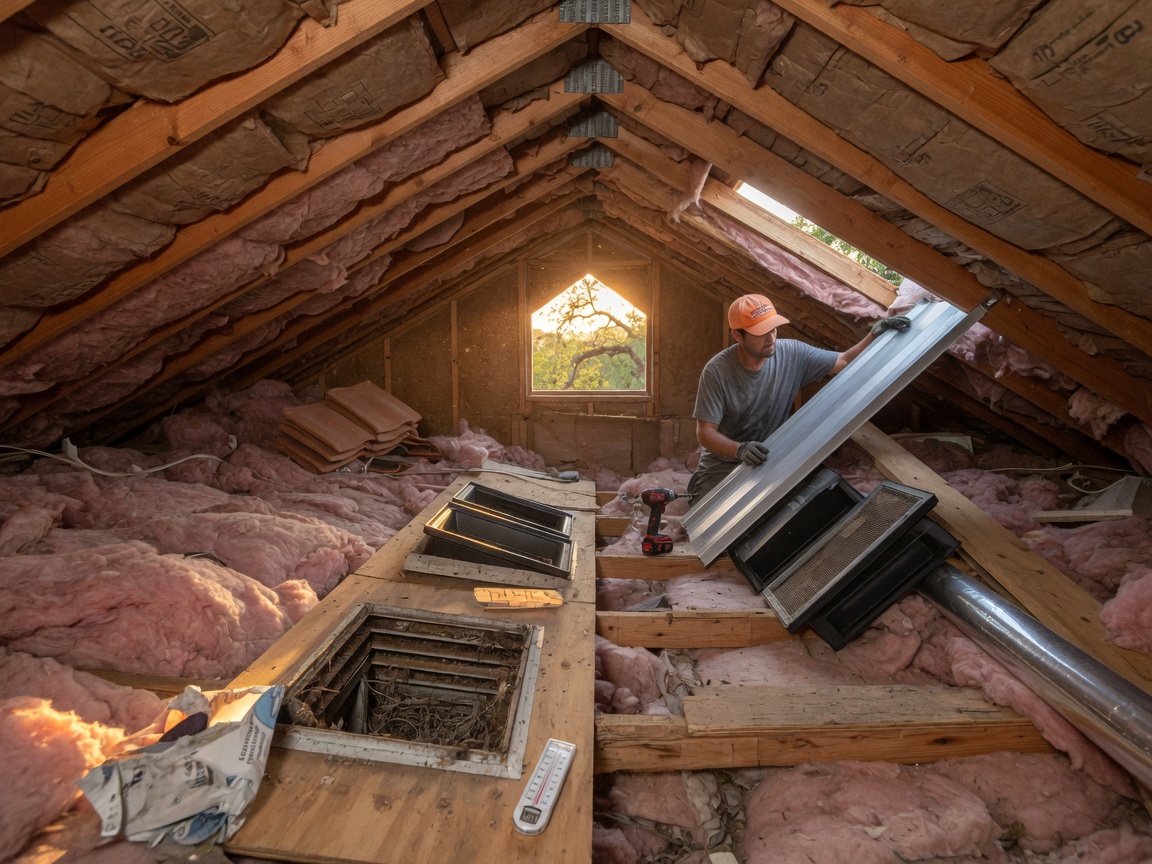
Proper ridge and soffit vent additions combined with powered exhaust fans lower peak attic temperatures by 20–30°F during Austin's July and August heat waves when outdoor humidity stays above 60%. Older homes in Clarksville and Travis Heights often lack adequate intake vents, trapping moisture from spring rains and accelerating shingle degradation on asphalt roofs.
Why Austin Summers Demand Better Attic Airflow
Austin's hot humid summers and mild winters create year-round moisture challenges inside attics. Daytime highs frequently exceed 95°F while nights offer little relief, so trapped heat radiates downward into living spaces near Lady Bird Lake and Zilker Park. Homes built before 1980 in Hyde Park and Barton Hills typically feature small or blocked soffit vents that fail once oak pollen and debris accumulate. In nearby Round Rock and Pflugerville, newer subdivisions still see ridge vent installations omitted during original construction, leaving rafters and insulation saturated during the brief but intense spring thunderstorm season.
Diagnosing Poor Ventilation on Local Roofs
Walk the attic on a sunny afternoon and check for these indicators common to East Austin and Mueller properties. Look for dark streaks on roof decking showing moisture from condensation, insulation that feels damp or compressed near the eaves, and temperatures that remain 40°F above outdoor readings. Metal roofing over Westlake homes often shows underside corrosion when exhaust fans are absent. Check for mold on rafters in homes near Barton Springs Pool where humidity lingers longer due to the creek corridor.
Practical Ventilation Fixes That Work Here
Install continuous ridge vents along the full roof peak on homes in Zilker and Clarksville to pull hot air upward. Pair them with new soffit vents sized at 1 square foot per 150 square feet of attic floor area to create balanced intake. Add a solar-powered exhaust fan rated 800–1,200 CFM on south-facing slopes common in Travis Heights to move air without increasing electric bills. Seal gaps around plumbing vents and recessed lights first so the new system does not pull conditioned air from living spaces.
How These Changes Protect Your Roof Long-Term
Improved airflow keeps shingles 15–20°F cooler, extending asphalt shingle life by several summers in humid conditions around Cedar Park. It also reduces ice dam risk during rare winter dips below freezing that affect Mueller and Downtown roofs. Homeowners who combine ventilation work with roof maintenance services catch small deck issues before they require full roof repair. Pairing the project with choosing shingles that handle Austin summer heat ensures the entire assembly performs together.
When to Call Local Experts
If your attic shows widespread mold or insulation saturation, schedule a full inspection before adding vents. Crews familiar with Travis County permitting can confirm that ridge vent cuts do not compromise rafter ties on older East Austin structures. For homes near the University of Texas Tower or Mount Bonnell slopes, wind-driven rain patterns require specific vent baffles that only local installers routinely use. Contact Florentino Brothers Roofing LLC at 7150 Ed Bluestein Blvd, Austin, TX 78723 or call 24 hours for an on-site assessment.